
Community Panhandling Response

PWC Works projects reflect our commitment of striving for exceptional customer service, maximizing operational efficiencies, increasing modernization, providing excellent service delivery, and collaborating with the community for a coordinated response that achieves the best possible outcomes for our residents and the overall wellbeing of the county.
What is the Panhandling Response Initiative?
Prince William County wants to ensure the safety and well-being of all its residents, visitors and businesses. In order to do this, it is important to help those who are panhandling in a human-centered way to solve the underlying reasons why they are panhandling.
On February 13, 2024, the Board of County Supervisors issued the following directive #24-05:
The County Attorney's Office was directed to provide legal research and advice on possible ordinance amendments regarding panhandling and public safety, to include reviewing other Virginia local jurisdiction ordinances; and directed the County Executive to provide policy recommendations on the issue once the County Attorney has provided the legal advice.
In response to the directive to address the policy recommendations, a process action team was established to examine and address the issue of panhandling in the community. The process action team working on this issue includes employees from several county agencies and offices, including Social Services, Community Services, County Attorney, Police Department, Community Safety, Transportation, Communications and Engagement, the Deputy County Executive for Safe and Secure Community and the Deputy County Executive for Health, Wellbeing and Environmental Sustainability. Staff also engaged with the members of Homeless Services’ Continuum of Care, the Chamber of Commerce and Keep Prince William Beautiful.
No one single strategy alone can address panhandling. It takes a comprehensive approach with several different strategies to make sustainable improvements in reducing panhandling. To that end, the process action team identified following three areas of concerns and developed strategies to address these concerns. They presented their action strategies to the Board on June 11, 2024.
Public Safety Perceptions/Concerns
- Traffic Safety
- Aggressive Behavior
- Loitering
Provide Needed Services
- Housing/Homeless Services
- Mental Health/Substance Use Services
- Employment Services
Address Negative Perceptions
- Community Image/Appearance
County staff was asked to come back to present to the Board on Oct. 8, 2024. During that meeting, the Board voted to defer action on the coordinated response and pilot employment program, and requested that staff come back with the communications plan. The communications plan was presented to the Board on Nov. 26, 2024, which they approved funding for during their meeting.
Public Engagement & Communications
Goal: Change the behavior of givers; instead of giving directly to the panhandler, encourage them to donate to our local nonprofit community partners that assist us in providing services.
The process action team is also recommending launching a #GiveLocalPWC campaign. Based on the team’s research, changing the behavior of the giver is vital to accomplishing the goal of reducing panhandling. Panhandling can be very lucrative, with some earning as much as $200 per day. Therefore, the goal of this strategy is to provide the community with the opportunity to continue to give donations, but instead of giving directly to the panhandler, they give to the local Homeless Services providers. The county has established a designated panhandling webpage that links to members of the Prince William Area Homeless Services Continuum of Care, encouraging people to “give where it counts” and give directly to those who provide an array of services that range from housing assistance and mental health services to employment services.
Encouraging givers to donate to homeless service providers should reduce the direct giving. This will provide financial resources that can then be used to assist those that are panhandling with getting the services they need to effectively address the underlying issues that are causing them to panhandle. We also plan to use social media, signage, and other promotional materials to engage with the community.
Success Criteria for the Panhandling Response Initiative
- Reduction in panhandling
- Improved public perception and concerns of safety
- Increased resources for Community Partners
- Improved public perception of county
Major Milestones Completed
County Commitment of Staff to Address Panhandling: The county has demonstrated a strong commitment to addressing panhandling through expanded staffing, coordinated outreach efforts between DSS and CSB, and active business engagement led by the Office of Community Safety.
Multiple Methods to Report Panhandling Incidents: The Process Action Team established a coordinated countywide reporting system for panhandling activity through 311, a dedicated phone line, designated email address, and referrals from the Prince William County Police Department, county staff, and community partners.
Outreach Efforts: The Process Action Team implemented a multi-channel reporting and referral system to improve identification and response to panhandling activity through 311, dedicated communication lines, and coordinated referrals from the Prince William County Police Department, county staff, and community partners.
Monthly Reporting: DSS implemented a monthly performance reporting process to monitor outreach activities and measure engagement outcomes involving both homeless and non-homeless individuals through the initiative.
Public Engagement & Communications: The PAT Team, in coordination with the County’s Communications Department, developed a comprehensive public information campaign that includes community updates, educational materials, alternative giving resources, multilingual outreach tools, and printable media toolkits to support public awareness and engagement efforts related to panhandling.
Brief Assessment: DSS and CSB outreach teams conduct field-based assessments and connect individuals with supportive services, including shelter, housing stabilization, behavioral health resources, case management, employment assistance, and benefits navigation.
Pilot Sign Program: The Process Action Team completed site identification, baseline analysis, and implementation planning for a phased pilot initiative targeting high-traffic panhandling locations, with evaluation measures established to assess program effectiveness and outcomes. The pilot signage will be installed in three phases at the following locations*:
Phase I Locations
- Dumfries Road and Van Buren Road
- Prince William Parkway and Smoketown Road
- Sudley Manor Drive and Ashton Avenue
- Route 1 and Cardinal Drive
- River Heritage Boulevard and Route 1
Phase II Locations
- Dumfries Road (234) and Village Parkway (I-95 North entrance)
- Prince William Parkway and Worth Avenue
- Prince Wiliam Parkway and Shoppers Best Way
- John Marshall Highway (Route 55) and James Madison Highway (Route 15)
- Route 1 and Occoquan Road (in front of CVS)
- Prince William Parkway and Route 1 (across from the 7-11)
Phase III Locations
- Dumfries Road (234) and Route 1
- Dale Boulevard and Gideon Drive
- Sudley Manor and Sudley Road
- Smoketown Road and Garza Way
- Linton Hall Road and Route 29 (this is a highway exit)
* Subject to change
How to Help Panhandlers
Download signs from the toolkit.
Support local nonprofit partners through the "Give Where It Counts" campaign.
-
Prince William County to Launch Next Phase of Panhandling Response Initiative with Intersection Signage
Share Prince William County to Launch Next Phase of Panhandling Response Initiative with Intersection Signage on Facebook Share Prince William County to Launch Next Phase of Panhandling Response Initiative with Intersection Signage on X (formerly Twitter) Share Prince William County to Launch Next Phase of Panhandling Response Initiative with Intersection Signage on Linkedin Email Prince William County to Launch Next Phase of Panhandling Response Initiative with Intersection Signage link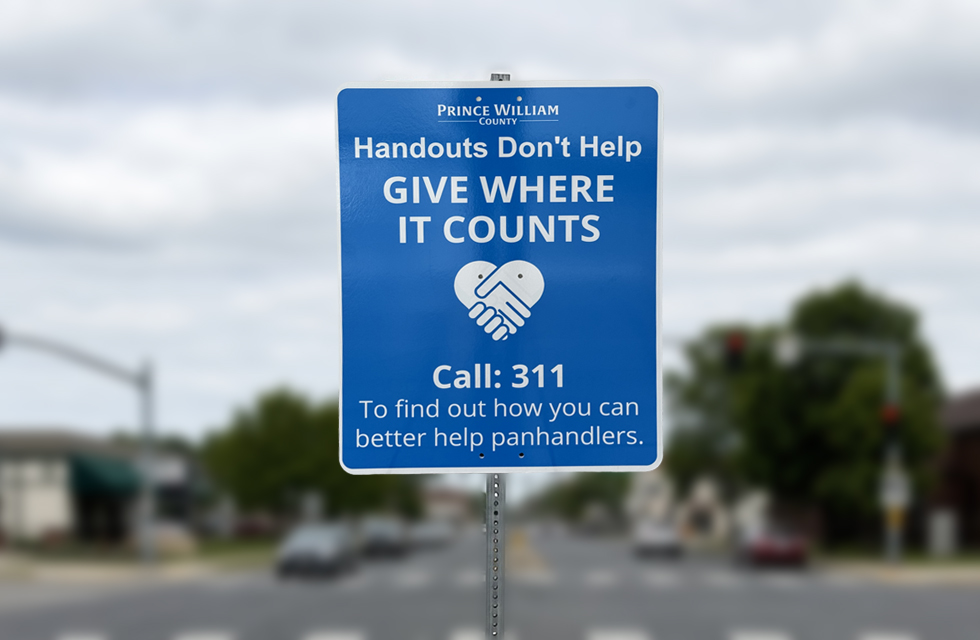
As the next step in Prince William County's ongoing Community Panhandling Response Initiative, the county will begin installing public awareness signs later this month at selected intersections where panhandling has been identified.
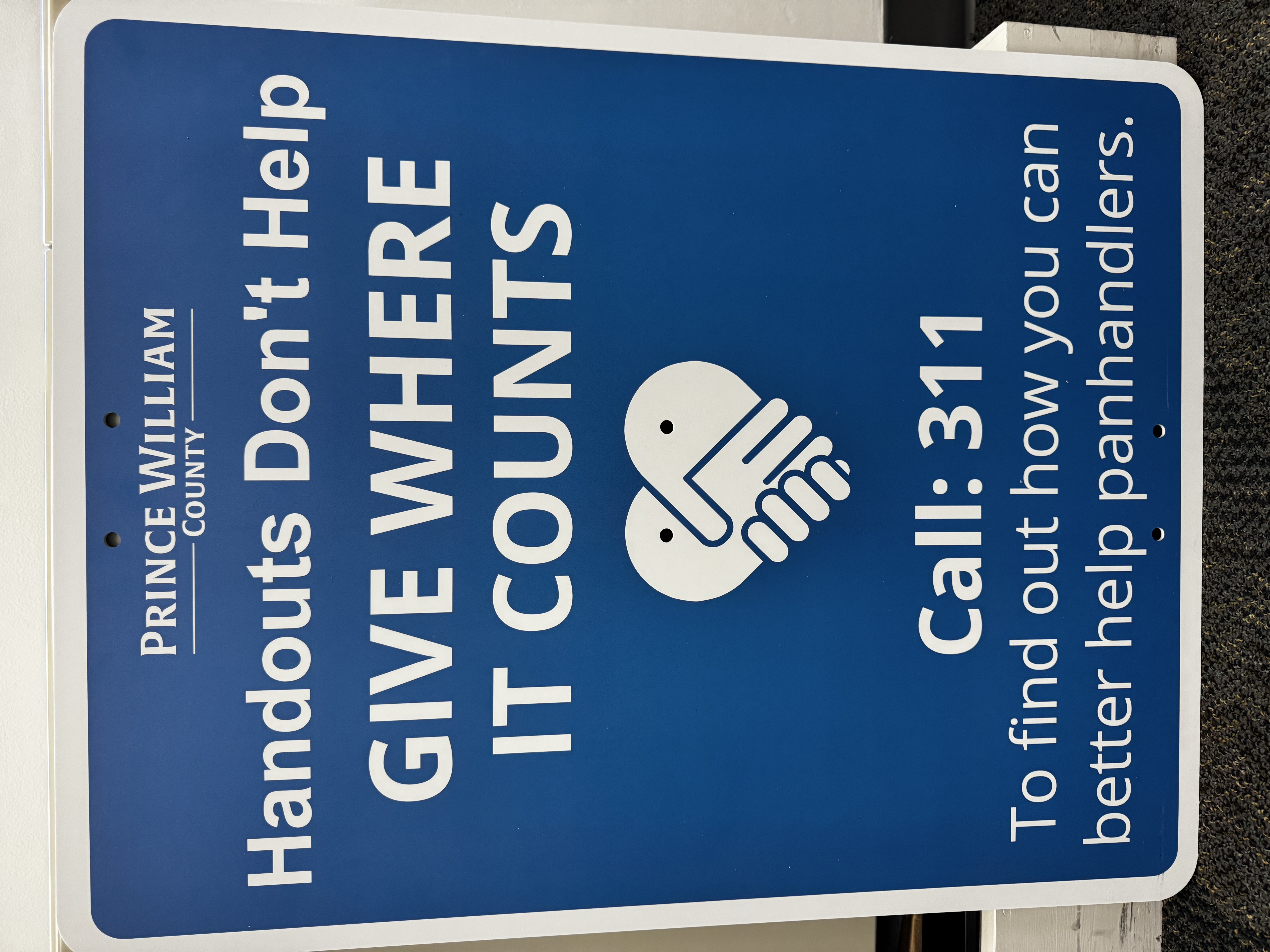
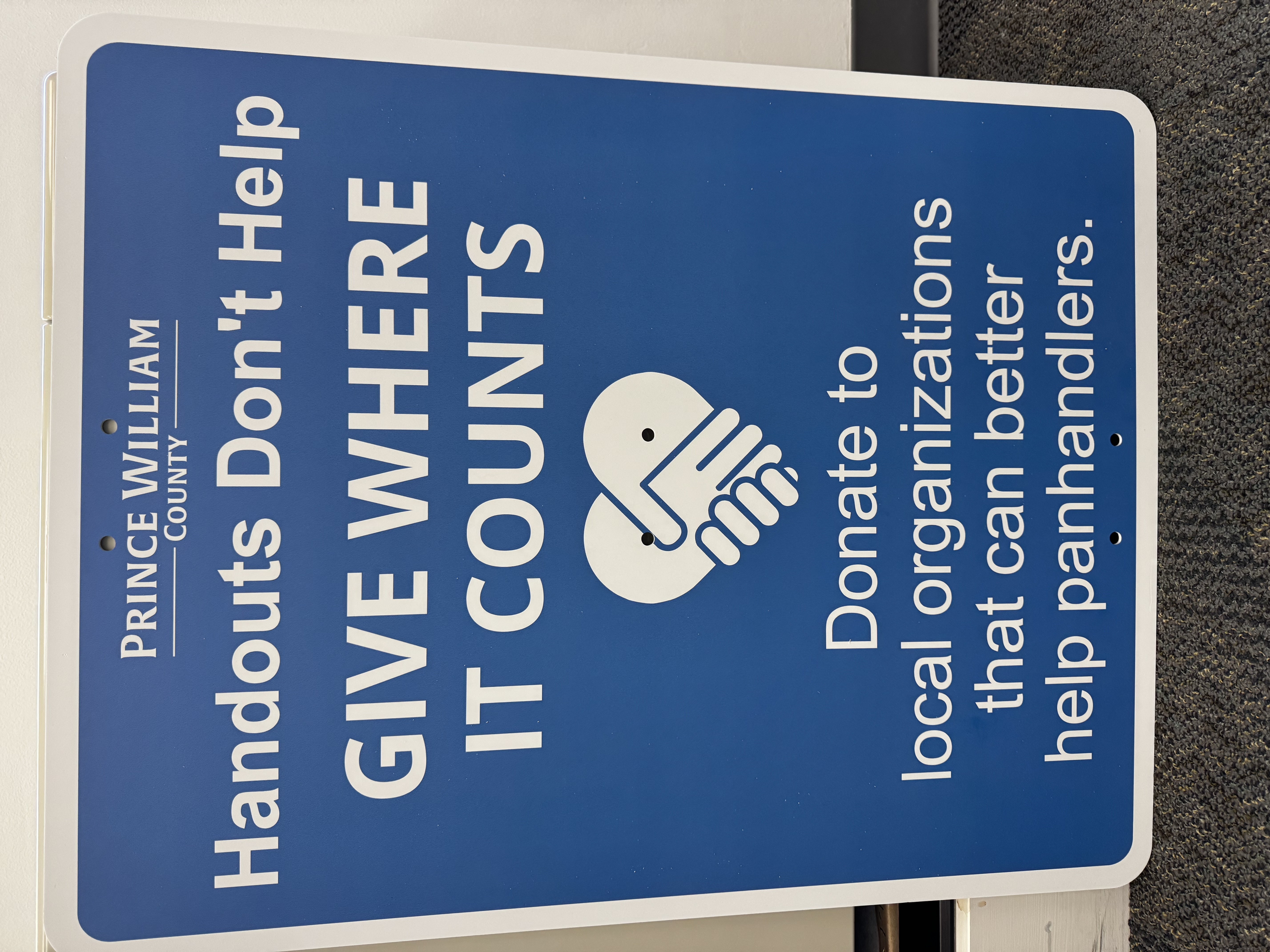
The signs encourage residents who encounter someone in need to call 311, where trained staff can connect individuals with available county services and community resources. The signs also encourage residents to "Give Where It Counts" by supporting local nonprofit organizations that provide assistance to people experiencing hardship.
The signage campaign is part of a broader county strategy developed by the Prince William Department of Social Services' Panhandling Response Action Team, which was established in 2024 to address concerns raised by the Board of County Supervisors and the community.
The initiative focuses on two key priorities: connecting individuals who panhandle with services that address the root causes of their circumstances and encouraging the public to support local nonprofit organizations rather than giving directly at intersections. By calling 311, residents can help connect individuals with housing assistance, food resources, employment support, behavioral health services and other available programs.
Calls to 311 will also provide useful data on program effectiveness and allow for appropriate routing of concerns. For example, reports of panhandling will be directed to DSS, which will dispatch outreach staff to provide information on available services. Reports of individuals selling goods (peddling) will be routed to the county’s non-emergency line. A Police Officer will respond to determine compliance with the peddler’s ordinance and provide guidance, as needed.
In the spring, county staff gathered information over a 30-day period to establish a baseline and better understand the extent of panhandling activity at several intersections across the county. The data collected, combined with information provided by the Prince William Police Department, helped identify locations for the initial signage rollout and will serve as a benchmark for evaluating the campaign's effectiveness.
Starting in August, signs will be installed in phases over the next few months and will remain in place for approximately 60 days. The phased approach will allow the team to establish measurable baseline data; deploy signage in a controlled and limited manner; evaluate effectiveness over a 60-day period; and determine potential next steps based on data and observations.
You can help panhandlers by:
Reporting panhandling through 311
Downloading signs for local businesses and areas using the toolkit
Supporting local nonprofit partners through the "Give Where It Counts" campaign -
Homeless Mobile Unit Rolls Back Into Service
Share Homeless Mobile Unit Rolls Back Into Service on Facebook Share Homeless Mobile Unit Rolls Back Into Service on X (formerly Twitter) Share Homeless Mobile Unit Rolls Back Into Service on Linkedin Email Homeless Mobile Unit Rolls Back Into Service link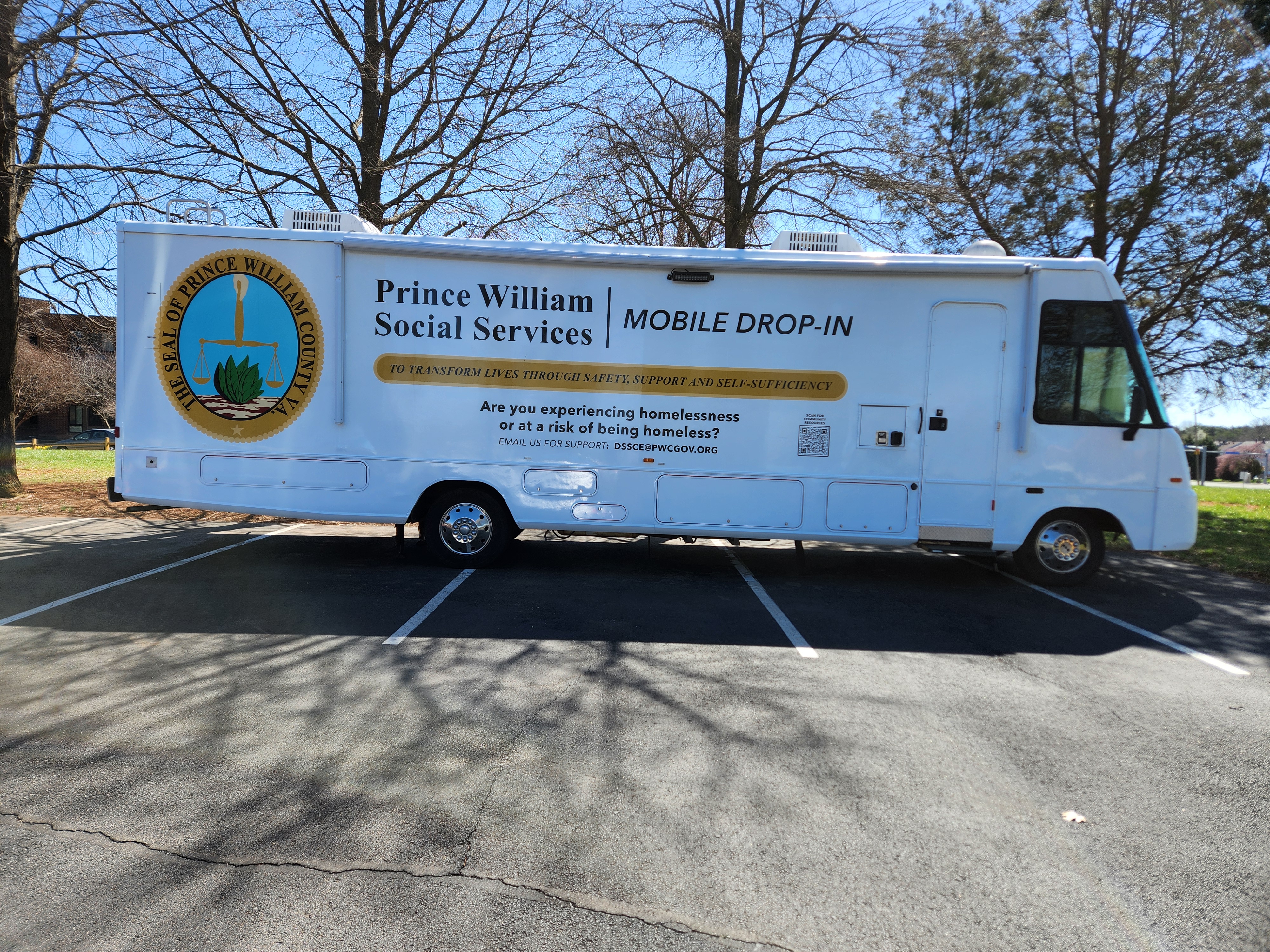
The Prince William County Homeless Mobile Unit reopened this spring, bringing much-needed services to the unsheltered community in the western part of the county. The mobile unit operates every Thursday from the Manassas Presbyterian Church parking lot at 8201 Ashton Avenue, offering lunches, as well as mental health, housing and substance abuse referrals.

Sign up to stay updated!
-
February 13, 2024: Board of County Supervisors Issues Directive
Community Panhandling Response has finished this stageThe Board of County Supervisors issued directive #24-05, directing the County Executive to develop strategies to address panhandling
-
February 2024: Program Development Assigned
Community Panhandling Response has finished this stageThe County Executive assigned program development to the Deputy County Executive of Health, Wellbeing & Environmental Sustainability.
-
March 2024: Panhandling Process Action Team Established
Community Panhandling Response has finished this stageThe Panhandling Process Action Team was established, consisting of the following county agencies:
- Social Services
- Community Services
- County Attorney
- Police Department
- Office of Community Safety
- Transportation
- Communications and Engagement
- Deputy County Executive for Safe & Secure Community
- Deputy County Executive for Health, Wellbeing and Environmental Sustainability
-
March 2024 - June 2024: Process Action Team Develops Proposed Strategies
Community Panhandling Response has finished this stageThe Process Action Team meets and develops proposed strategies based on best practices.
-
June 11, 2024: Panhandling Reduction Strategies Presented to the Board of County Supervisors
Community Panhandling Response has finished this stageThe Deputy County Executive for Health, Wellbeing & Environmental Sustainability presented the strategies for addressing panhandling to the Board of County Supervisors.
-
August 2024 – September 2024: One-on-One Follow Up Meetings with Board Members
Community Panhandling Response has finished this stageOne-on-one follow up meetings with each member of the Board of County Supervisors were held to provide more details of each strategy and address any concerns or recommendations.
-
October 8, 2024: County Executive Will Seek Approval to Implement Strategies From the Board
Community Panhandling Response has finished this stageThe Board of County Supervisors voted to defer action and asked the County Executive to bring the item back at a future date, specifically the communications campaign.
-
November 26, 2024: Bring Communications Campaign Budget Back to the Board of County Supervisors for Approval
Community Panhandling Response has finished this stage -
December 3, 2024: Launch "Give Where It Counts" Campaign
Community Panhandling Response has finished this stagePrince William County will launch its "Give Where it Counts" panhandling reduction campaign on Giving Tuesday, Dec. 3, 2024.
-
May 20, 2025: Staff Update to Board of County Supervisors
Community Panhandling Response has finished this stageThe Department of Social Services and the Office of Communications and Engagement presents to the Board of County Supervisors data on panhandlers in the community and the results of the winter communications campaign.
-
Spring/Summer 2025: Phase 2 of “Give Where It Counts” Campaign Begins
Community Panhandling Response has finished this stagePrince William County will launch its summer/spring "Give Where it Counts" panhandling reduction campaign.
-
May 2026: 311 Accepting and Directing Panhandling Related Calls
Community Panhandling Response has finished this stage -
May 19, 2026: Staff Update to the Board of County Supervisors
Community Panhandling Response has finished this stage -
Spring 2026: Pilot Signage Initiative Planning
Community Panhandling Response has finished this stageThe Process Action Team completed site identification, baseline analysis and created an implementation plan for a phased pilot initiative targeting high-traffic panhandling locations, with evaluation measures established to assess program effectiveness and outcomes.
-
August - December 2026: Pilot Signage Implementation
Community Panhandling Response is currently at this stage -
Future: Continued Evaluation of Program
this is an upcoming stage for Community Panhandling ResponseDuring this one-year period, the Process Action Team will conduct continual evaluation of the program to determine its effectiveness in addressing panhandling. Program modifications and updates will continue during this period.
-
Communications & Engagement Director

Phone 703-792-6606 Email [email protected]